

Who Invented Mead? A Global Journey Through the History of the World’s Oldest Alcohol
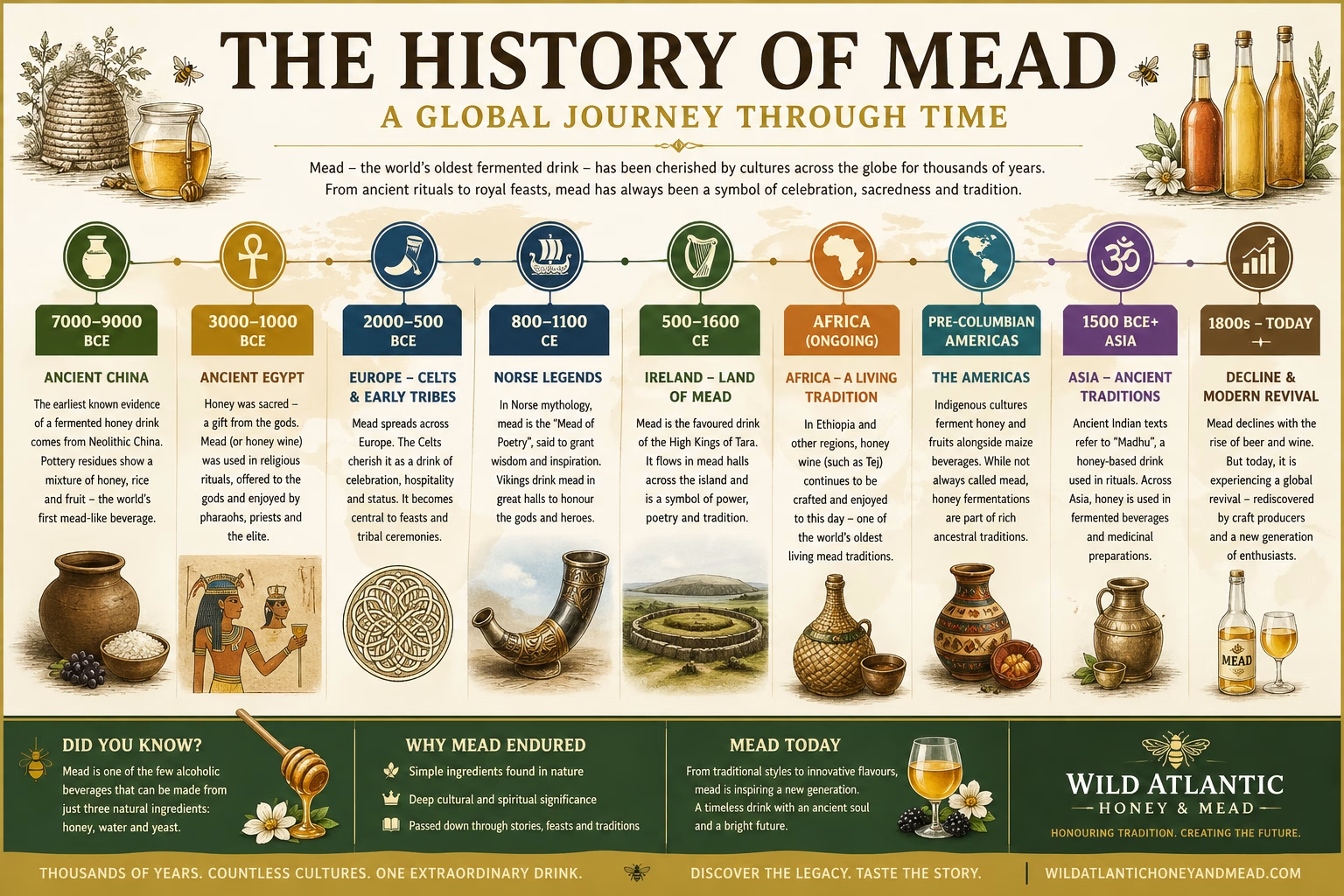
For centuries, a single question has simmered in the back of taprooms and history departments alike: Who invented mead? Often called “honey wine,” mead is frequently associated with Viking longships or the misty hills of ancient Ireland. However, the true story of mead’s origin is far older and much more global than most realize. From the Neolithic villages of China to the sacred texts of India and the Horn of Africa, mead is the common thread in the tapestry of human civilization.
1. The “Accidental” Discovery: African and Ethiopian Origins
Before humans mastered agriculture, nature was brewing mead in the hollows of African Baobab trees. During the rainy season, wild beehives would flood, mixing raw honey with rainwater and airborne yeasts. Anthropologists believe hunter-gatherers discovered these “natural vats,” making mead the ancestor of all fermented beverages.
The Ethiopian Tradition: Tej
In addition to ancient African origins, Ethiopian culture has a thousands-year-old history with a traditional mead known as tej. This highly regarded ceremonial drink uses gesho (a local bittering leaf or twig from Rhamnus prinoides) instead of traditional yeast.
Tracing its roots as far back as the Aksumite Empire, tej was once reserved exclusively for royalty and the elite. Over the centuries, the accessibility of tej expanded, and it remains the national drink of Ethiopia today. Served in a traditional flask-like vessel called a berele, it is poured during festivals, religious celebrations, weddings, and family gatherings.
2. The Archaeological Smoking Gun: Neolithic China (7000 BCE)
If we define the “inventor” as the first culture to intentionally manufacture and store a honey-based drink, the title belongs to Neolithic China. In the village of Jiahu (Henan Province), archaeologists discovered pottery shards dating back to 7000 BCE.
Molecular analysis found chemical signatures of a “prehistoric cocktail” consisting of honey, rice, and hawthorn berries. This landmark research was detailed in the Proceedings of the National Academy of Sciences (PNAS). This discovery predates the earliest known evidence for both grape wine and grain-based beer.
3. The Divine Nectar: Egypt, Greece, and India
Mead was highly revered and celebrated across several ancient civilizations:
• Ancient Egypt: Ancient Egyptians are considered pioneers of beekeeping in the Mediterranean world, viewing bees as sacred insects. Mead was used in both religious ceremonies and daily life, symbolizing prosperity and divine blessings. It was frequently mixed with spices or used as an offering to deities.
• Greece and India: In the Rigveda, one of humanity’s oldest sacred texts (c. 1700 BCE), mead is described as Soma—the drink of the gods that bestowed immortality. Similarly, the Ancient Greeks referred to mead as Ambrosia or “Hydromel.” They believed bees were messengers of the gods and that mead was the “dew of the heavens.” The linguistic roots of the word “mead” (Sanskrit Madhu, Greek Methu) prove it was a shared cultural cornerstone across ancient Eurasia.
4. The Golden Age: Irish Heritage, Viking Heritage, and the Americas
The Irish “Bee-Laws”
In Early Medieval Ireland, mead was governed by the Brehon Laws. The Bechbretha (Bee-Judgments) were complex legal codes that dictated bee ownership and honey tributes. The Irish tradition of gifting a month’s supply of mead to newlyweds led to the modern term “Honeymoon”. For a deeper look at the cultural impact of mead, see HeritageDaily’s analysis.
The Viking “Mead of Poetry”
To the Norse, mead was metaphysical. They told tales of the Mead of Poetry, a substance that gave the drinker the gift of wisdom and scholarship. While the Vikings popularized the drink in Northern Europe, it was already a global phenomenon. Insight into the modern resurgence of this ancient drink can be found in The Economist.
Indigenous Traditions in the Americas
Before the arrival of Europeans, indigenous communities in the Americas (including pre-Columbian Maya societies) brewed honey-based alcoholic beverages. These were consumed during sacred rituals, seasonal festivals, and important community gatherings.
5. Modern Significance and Health Properties of Mead
Mead’s longevity lies not just in its alcohol content, but also in the rich antibacterial properties of honey itself. While it has experienced a resurgence in popularity among craft beverage enthusiasts, its production has retained its traditional and localized forms. In the Horn of Africa, tej continues to be spontaneously fermented using gesho, functioning as a natural preservative.
Frequently Asked Questions
• Is mead the oldest alcohol in the world?
• Yes, archaeological evidence from China (7000 BCE) predates the earliest known evidence for both grape wine and grain-based beer.
• Did the Vikings or Europeans invent mead?
• No. They were its most famous enthusiasts in the medieval period, but it had been brewed in Asia and Africa for millennia prior.
• Is mead gluten-free?
• Pure mead made from honey, water, and yeast is naturally gluten-free, making it a popular choice for those with dietary restrictions today.
References & Scientific Sources
• McGovern, P. E., et al. (2004). “Fermented beverages of pre- and proto-historic China.” PNAS.
• Hornsey, I. (2003). A History of Beer and Brewing (including the evolution of honey-based ferments).
• World History Encyclopedia: “Mead – The Drink of the Ancient World”.
• The Brehon Laws: Bechbretha (Early Irish Law Series, Dublin Institute for Advanced Studies).
• Demand Africa: Sweet Tej: Ethiopian Honey Wine.
• Atlas Obscura: T’ej – Ethiopian Honey Wine.