
Two New Nucleus Colonies Added to Our Wicklow Apiary: Why Nucs Are the Foundation of a Healthy Bee Farm
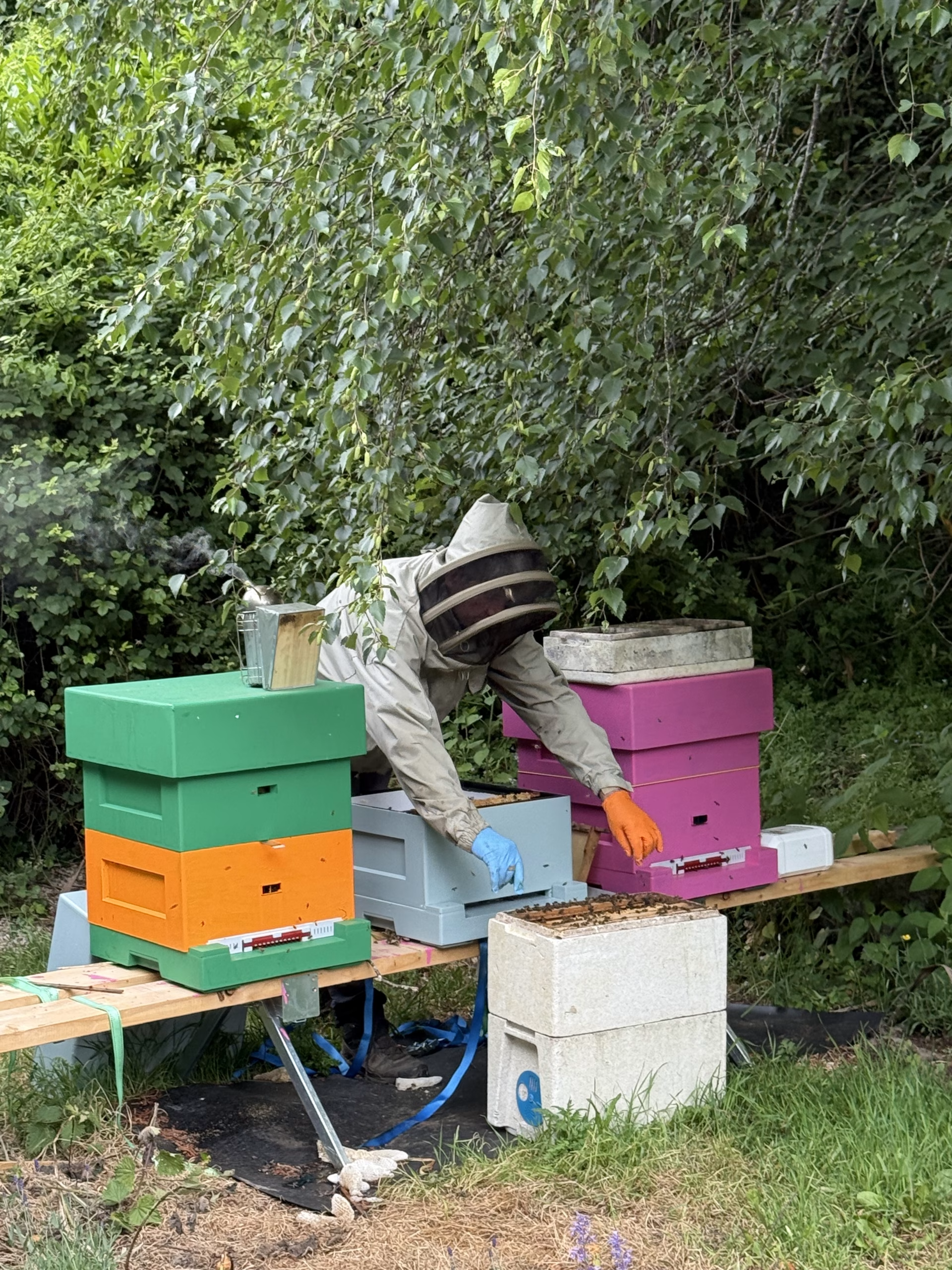
Today marked another important step in the growth of our apiary as we introduced two new nucleus colonies, commonly known as “nucs”, into our Wicklow bee yard.
To many people, a nucleus colony simply looks like a small hive. In reality, a nuc represents one of the most important building blocks in modern beekeeping. Every strong colony starts somewhere, and for many healthy honey-producing hives, that journey begins with a nucleus colony.
These small but highly organised colonies are not only vital for expanding an apiary, but also play an important role in supporting honey bee health, conservation, pollination and sustainable beekeeping practices.
What Is a Nucleus Colony?
A nucleus colony is a small, fully functioning honey bee colony that contains all the essential components needed to develop into a full-sized hive.
Typically housed on five frames, a nuc contains:
• A laying queen
• Approximately 5,000–10,000 worker bees
• Brood in various stages of development
• Honey stores
• Pollen reserves
• A functioning social structure
Unlike a package of bees, which consists mainly of loose worker bees and a queen, a nucleus colony is already established and operating as a complete colony.
The queen is laying eggs, young bees are emerging daily, and the colony is already carrying out all the activities needed for survival and growth.
In simple terms, a nuc is a small colony with enormous potential.
Why Nucleus Colonies Are So Valuable
Nucs are one of the most effective and sustainable ways for beekeepers to increase hive numbers.
Because they already contain brood, food stores and a proven queen, they are often far more reliable than starting a colony from scratch.
Beekeepers use nucleus colonies to:
• Expand apiaries
• Replace winter losses
• Improve bee genetics
• Create reserve colonies
• Support queen breeding programmes
• Reduce the need for imported bees
In Ireland, where weather conditions can be challenging and nectar flows can be unpredictable, strong nucleus colonies are particularly valuable because they allow apiaries to recover and grow quickly.
How 5,000 Bees Become 50,000
One of the most remarkable aspects of honey bees is how rapidly a colony can expand.
A healthy queen can lay over 1,500 eggs per day during peak season.
As those eggs develop into worker bees, the workforce increases dramatically.
The more workers a colony has:
• The more nectar it can gather
• The more pollen it can collect
• The more brood it can raise
• The faster the colony grows
A nucleus colony that begins with 5,000–10,000 bees can grow into a thriving colony of 40,000–60,000 bees during a successful season.
This growth happens through a remarkable cycle of cooperation where every bee performs a role, from brood care and hive maintenance to guarding, foraging and food storage.
What begins as a relatively small colony can become a highly productive hive capable of pollinating thousands of flowers every day.
Nucleus Colonies vs Established Colonies
Although both are complete colonies, there are important differences between a nuc and a mature hive.
Nucleus Colony
• Usually five frames
• 5,000–10,000 bees
• Growing population
• Limited honey production initially
• Easier to transport and manage
• Primarily focused on development
Established Colony
• Typically 30,000–60,000 bees
• Large brood nest
• Strong foraging force
• Greater honey production potential
• More resilient to short-term setbacks
• Ready for honey supers during the season
A nucleus colony represents future potential, while an established colony represents current productivity.
Both are essential components of a successful apiary.
Sustainable Beekeeping and Colony Resilience
One of the most important reasons we work with nucleus colonies is resilience.
Beekeeping is increasingly affected by changing weather patterns, forage availability, pests and disease pressures.
Having healthy nucs available allows a beekeeper to strengthen weaker colonies, replace losses and maintain healthy apiary numbers without relying heavily on imported stock.
Strong local colonies are often better adapted to Irish weather conditions and local forage patterns.
For this reason, building sustainable colony numbers through nucleus colonies is an important part of responsible beekeeping.
Monitoring Hive Health with BroodMinder Technology
Modern beekeeping is increasingly combining traditional skills with technology.
Across our apiaries in Wicklow, Mayo and at the Native Irish Honey Bee Sanctuary on Inishturk Island, we use BroodMinder hive monitoring technology to help us better understand colony behaviour and health.
BroodMinder sensors allow beekeepers to monitor conditions inside a hive without constantly opening it.
These sensors can record:
• Internal hive temperature
• Humidity levels
• Colony weight changes
• Seasonal trends
• Brood activity
• Potential swarming indicators
By monitoring temperature and humidity patterns, we can gain valuable insights into colony development and brood rearing activity. (doc.mybroodminder.com
)
BroodMinder’s monitoring systems were developed specifically to help beekeepers track hive health and identify changes within colonies before problems become serious. (BroodMinder
)
You can learn more about the technology here:
BroodMinder Hive Monitoring Systems
Why Hive Monitoring Matters
Traditional hive inspections remain an essential part of beekeeping, but opening a hive can disturb the colony and is not always practical, particularly during poor weather or winter months.
Monitoring technology provides an additional layer of understanding.
For example:
• Sudden weight loss may indicate swarming.
• Falling temperatures can suggest brood reduction.
• Unusual humidity levels may indicate ventilation issues.
• Stable brood temperatures often indicate a healthy queen and active brood nest.
The ability to compare data between apiaries in Wicklow, Mayo and Inishturk also helps us better understand how different environmental conditions influence colony development.
As climate conditions continue to change, data-driven beekeeping is becoming increasingly valuable.
Supporting the Native Irish Honey Bee
Beyond honey production, our beekeeping activities are closely linked to conservation.
The Native Irish Honey Bee Sanctuary on Inishturk Island was established to help protect and raise awareness of Ireland’s native honey bee, Apis mellifera mellifera.
These dark honey bees evolved over thousands of years to survive Ireland’s cool, wet Atlantic climate and are regarded as one of Europe’s most climate-resilient honey bee populations. (Native Irish Bee Sanctuary
)
Conservation efforts across Ireland aim to preserve these locally adapted genetics and reduce threats from disease, hybridisation and environmental pressures. (nihbs.org
)
You can learn more about the sanctuary here:
Native Irish Honey Bee Sanctuary, Inishturk Island
For further information about conservation of Ireland’s native honey bee:
Native Irish Honey Bee Society (NIHBS)
Looking Ahead
The arrival of these two new nucleus colonies in our Wicklow apiary represents far more than the addition of a few thousand bees.
Each nuc contains the potential to become a thriving colony numbering tens of thousands of bees. Each one will contribute to pollination, biodiversity, honey production and the long-term sustainability of our apiaries.
By combining traditional beekeeping practices with modern monitoring technology and a commitment to conservation, we hope to support not only healthy colonies, but also greater understanding and appreciation of Ireland’s remarkable honey bees.
Every strong hive begins somewhere.
Today, for two new colonies in Wicklow, that journey continues.