Ireland’s First Three-Location Honey Bee Monitoring Project Connects Inishturk Island, Mayo Mainland and Wicklow Through Live Hive Data
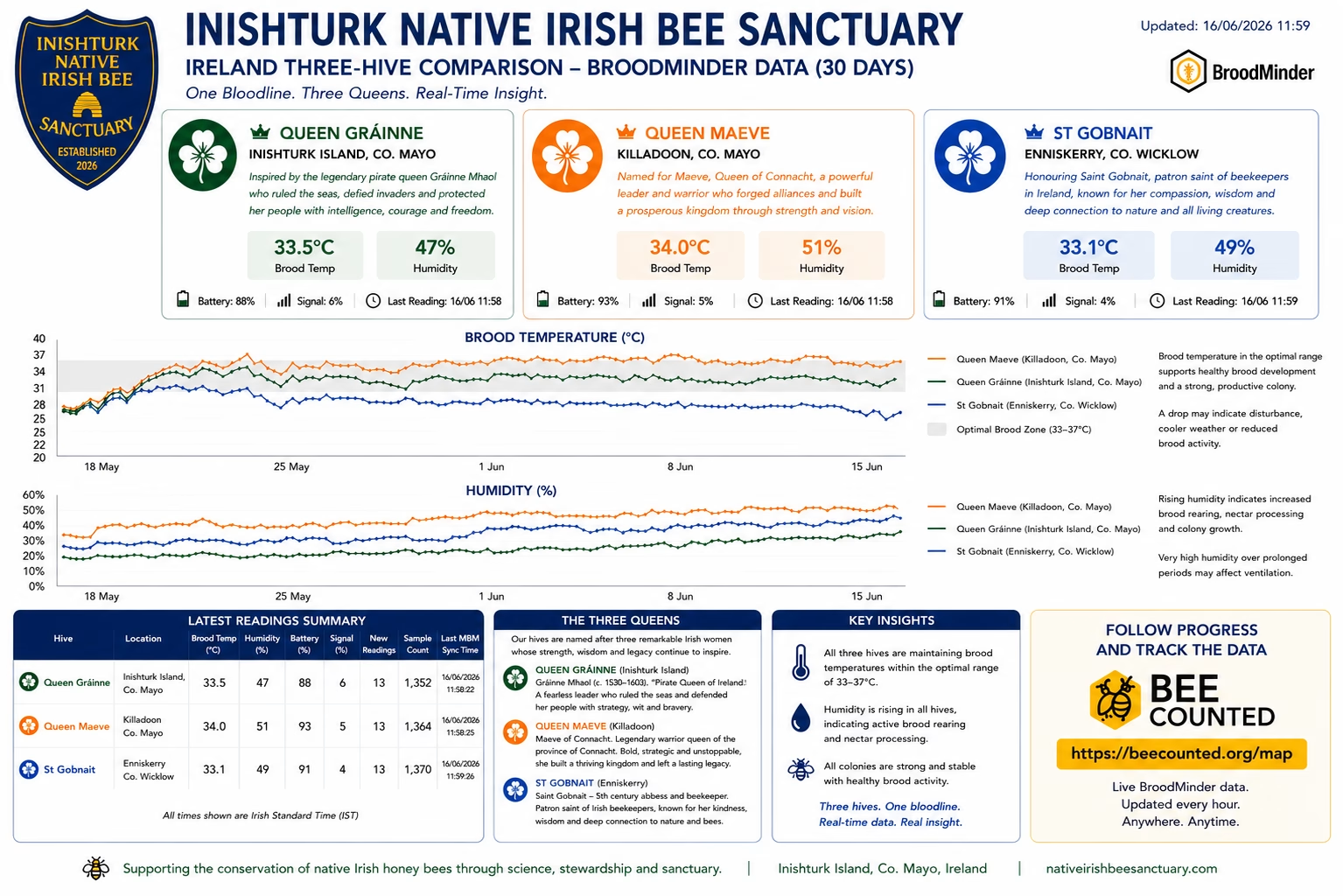
The Inishturk Native Irish Honey Bee Sanctuary is proud to launch what is believed to be one of Ireland’s first long-term three-location comparative honey bee monitoring projects, combining traditional beekeeping with modern technology to better understand the health, welfare and performance of honey bee colonies across very different Irish environments.
Using BroodMinder hive monitoring sensors, remote communication hubs and detailed hive inspections, the project follows three related colonies located in:
- Inishturk Island, County Mayo – a remote Atlantic island environment.
- Killadoon, County Mayo – on the mainland overlooking the Atlantic.
- Enniskerry, County Wicklow – on Ireland’s milder east coast.
All three colonies originated from the same bloodline of Native Irish Honey Bees (Apis mellifera mellifera) supplied from Spiddal, County Galway, on Ireland’s west coast.
Why Spiddal Bees?
When selecting bees for the project, we deliberately chose colonies from the west coast of Ireland rather than importing bees from elsewhere.
Spiddal lies on the edge of the Atlantic and experiences many of the same environmental pressures faced by bees on Inishturk Island, including:
- Strong Atlantic winds
- High rainfall
- Rapid weather changes
- Cooler spring temperatures
- Shorter foraging windows
Our thinking was simple: if bees have adapted to thrive on Ireland’s exposed western seaboard, they may be particularly well suited to both the challenging Atlantic conditions of Inishturk and the more sheltered environment of County Wicklow.
Because all three colonies come from the same genetic background, differences in performance may provide valuable insights into how environment influences colony development.
Bringing Honey Bees Back to Inishturk
One of the most exciting aspects of the project is the establishment of honey bee colonies on Inishturk Island.
The first colonies were introduced on World Bee Day, 20 May 2026, marking a significant milestone for biodiversity and environmental education on the island.
While wild pollinators have always been part of Inishturk’s ecosystem, managed honey bee colonies have not traditionally been present. The project therefore offers a unique opportunity to study how colonies perform in an isolated Atlantic environment compared with mainland locations.
The island colony, named Queen Gráinne, honours the legendary pirate queen Gráinne Mhaol (Grace O’Malley), whose history is deeply connected to the Mayo coastline and Atlantic waters surrounding Inishturk.
Three Queens, Three Locations, One Bloodline
The project’s colonies are named after three remarkable Irish women:
Queen Gráinne – Inishturk Island
Named after Gráinne Mhaol (Grace O’Malley), the famous sixteenth-century pirate queen who ruled the western seas and became one of Ireland’s most iconic historical figures.
Queen Maeve – Killadoon, County Mayo
Named after Queen Maeve of Connacht, one of the most famous figures in Irish mythology. Maeve ruled the ancient province of Connacht and is remembered as a powerful leader, strategist and warrior queen.
Saint Gobnait – Enniskerry, County Wicklow
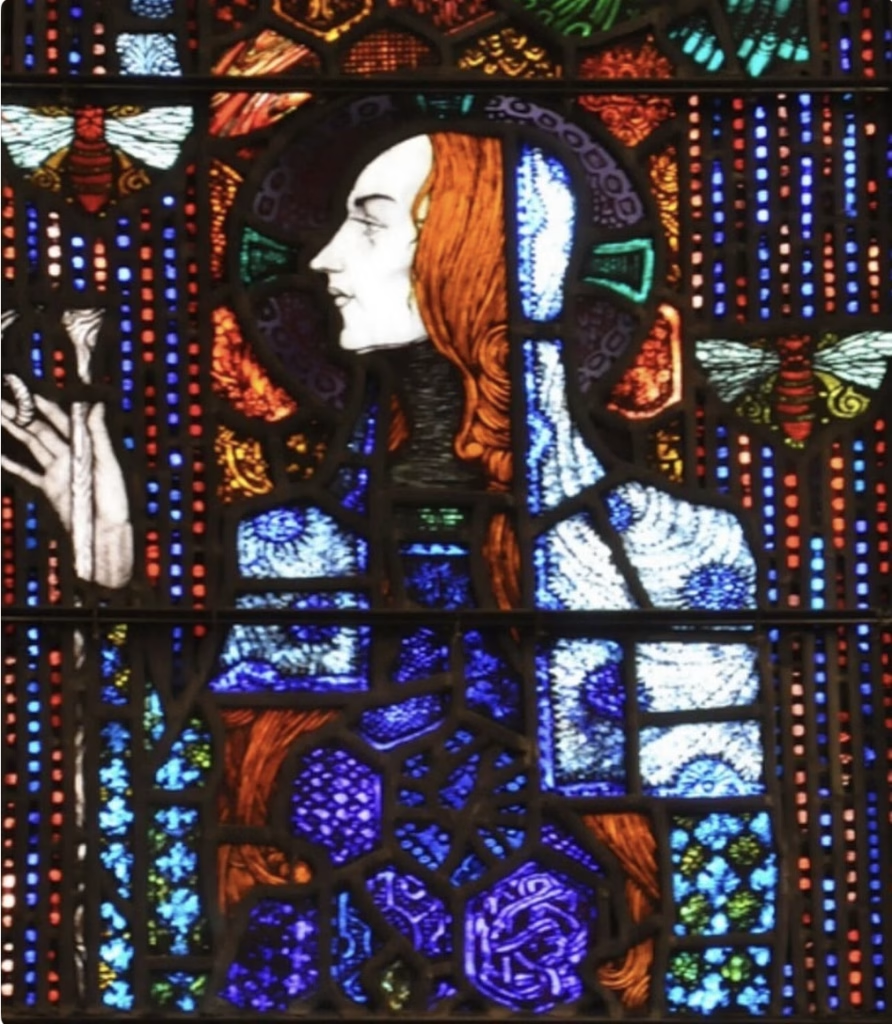
Named in honour of Saint Gobnait, the patron saint of beekeepers in Ireland, whose association with bees stretches back over 1,500 years.
Together, the three colonies represent Ireland’s heritage, mythology, biodiversity and beekeeping traditions.
Using BroodMinder Technology to Monitor Bee Health
Each colony is equipped with BroodMinder monitoring technology, allowing beekeepers and researchers to collect detailed hive information without disturbing the bees.
The system records:
- Brood nest temperature
- Hive humidity
- Colony activity trends
- Environmental changes
- Seasonal development patterns
Remote communication hubs installed at the sites upload data continuously, allowing real-time monitoring even from isolated locations such as Inishturk Island.
Visitors can follow the project’s progress live through BeeCounted:
Combining Technology with Traditional Beekeeping
Technology alone never tells the whole story.
Alongside BroodMinder data, regular hive inspections record:
- Queen performance
- Brood patterns
- Colony temperament
- Honey production
- Swarming behaviour
- Disease monitoring
- Varroa management
- Winter survival rates
By combining sensor data with physical inspections, the sanctuary hopes to build one of the most detailed long-term datasets ever assembled on Native Irish Honey Bees across multiple Irish environments.
A Long-Term Study for Bee Health and Biodiversity
The project’s aim is not simply to compare three colonies over a single season.
Instead, it seeks to create a multi-year record of how related colonies perform in:
- Atlantic island conditions
- Atlantic mainland conditions
- East coast conditions
Over time, the data may provide valuable insights into:
- Colony resilience
- Climate adaptation
- Native Irish Honey Bee performance
- Overwintering success
- Brood development
- Foraging patterns
- Honey production
- Bee welfare and sustainability
Supporting the Future of Native Irish Honey Bees
The Inishturk Native Irish Honey Bee Sanctuary was established to support conservation, education and public awareness of Ireland’s native honey bee.
By combining modern hive monitoring technology with traditional beekeeping knowledge, this project demonstrates how data can help improve understanding of bee health while engaging the public in one of Ireland’s most important pollinator conservation stories.
One bloodline. Three queens. Three locations. Real-time insight into the future of Ireland’s native honey bees.
Follow the project:
Track the live hive data:
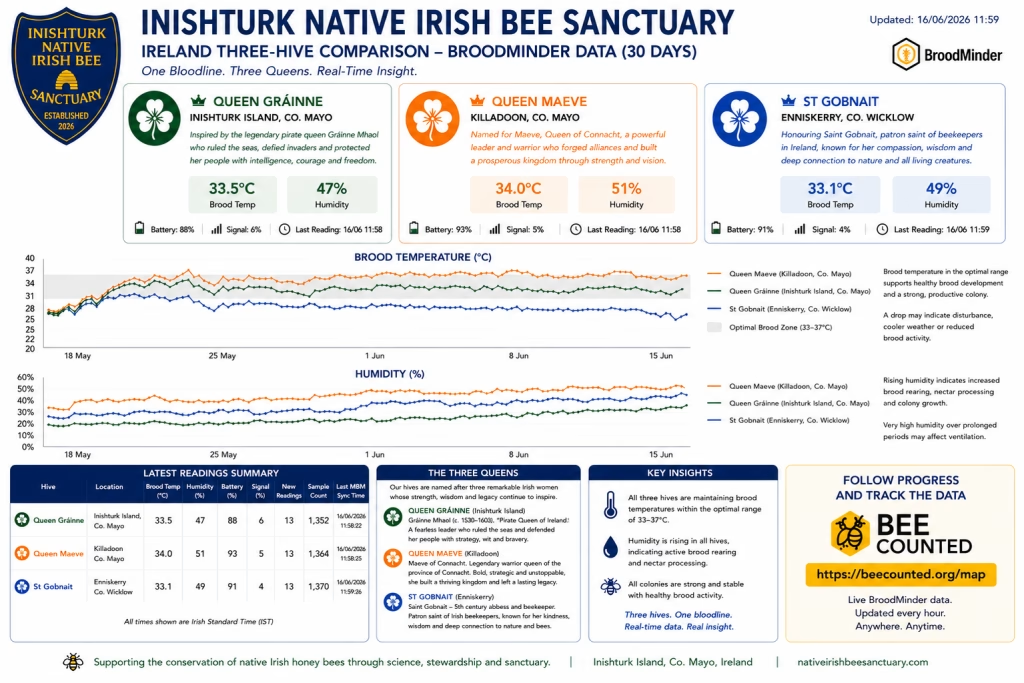
The data